Best Seller Icon Bestseller

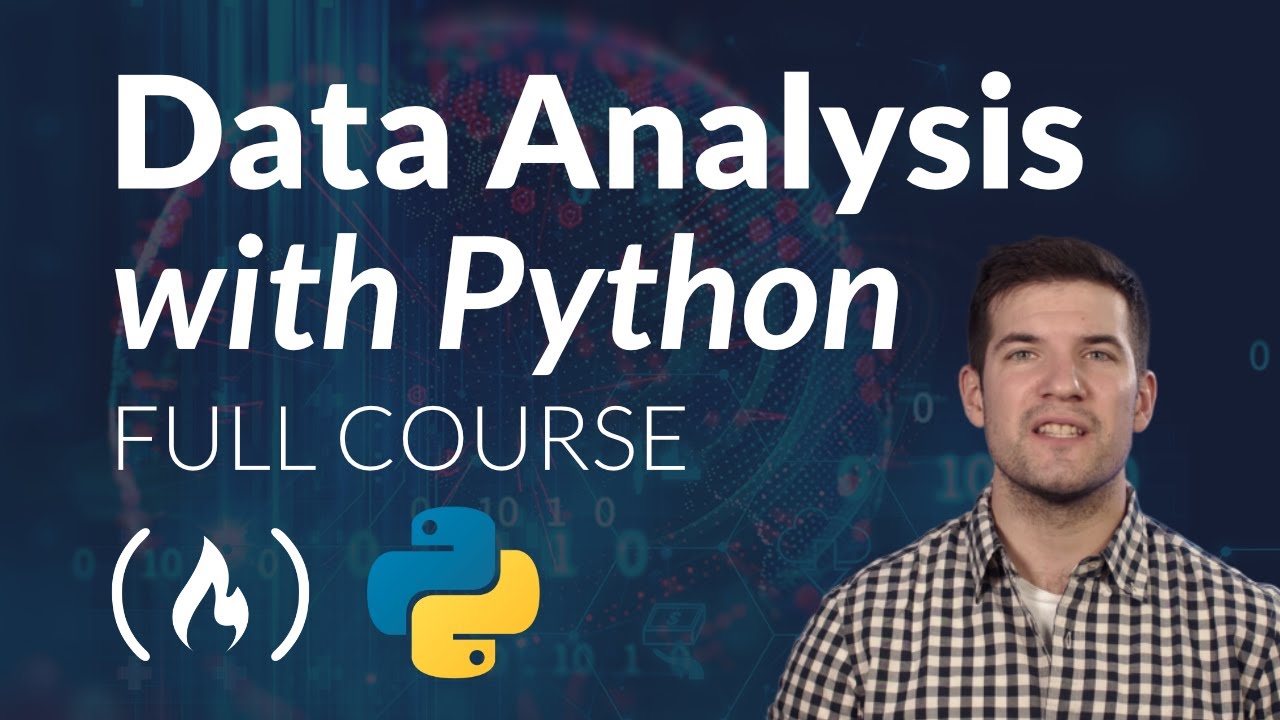
ADVANCE DIPLOMA In DATA ANALYTICS WITH PYTHON(M-DAWP-3725)

  • Last updated Feb, 2026
  • Certified Course
Video Images
Preview this course

Course Includes

  • Duration5 Months
  • Enrolled6
  • Lectures50
  • Videos4
  • Notes1
  • CertificateYes

What you'll learn

qualification in data analytics with Python typically involves completing professional certifications or academic coursework that validates proficiency in Python programming and key data analysis libraries. Key components include knowledge of statistics, data manipulation, visualization, and sometimes machine learning concepts. Python InstitutePython Institute

 +2

Core Skills Required

A successful qualification in this field demonstrates a practical skill set centered around turning raw data into actionable insights. Essential skills include: UncodemyUncodemy

  • Python Programming Fundamentals: Understanding basic syntax, data types, control flow, functions, and object-oriented programming.
  • Data Manipulation and Wrangling: Proficiency with key Python libraries like Pandas and NumPy for handling missing values, cleaning datasets, and transforming data into suitable formats for analysis.
  • Statistical Analysis: Knowledge of descriptive and inferential statistics, probability, and hypothesis testing to derive meaningful insights.
  • Data Visualization: Ability to create various plots and graphical representations using libraries such as Matplotlib and Seaborn to effectively communicate findings.
  • Database Knowledge: Experience with data retrieval and management using SQL to interact with databases.
  • Problem-Solving: The capacity to think algorithmically and apply data analysis techniques to solve real-world problems and support data-driven decision-making


Show More

Course Syllabus

A comprehensive "Data Analytics with Python" syllabus typically covers Python fundamentals, data manipulation, statistical analysis, data visualization, and an introduction to machine learning using key libraries like Pandas, NumPy, and MatplotlibCourseraCoursera

 +4

Core modules often include:

1. Python Fundamentals

This section focuses on the building blocks of the Python language for data professionals. CourseraCoursera

  • Introduction to Python: Overview, environment setup (e.g., Anaconda, Jupyter Notebook), and basic syntax.
  • Data Structures: Understanding and using lists, tuples, dictionaries, and sets.
  • Control Flow: Implementing conditional statements (ifelifelse) and loops (forwhile).
  • Functions and OOP: Defining and calling functions for modularity, and an introduction to Object-Oriented Programming (OOP) concepts. Sona College of TechnologySona College of Technology
  •  +4

2. Data Wrangling and Preprocessing

This module is crucial for preparing raw data for analysis. CourseraCoursera

  • Importing/Exporting Data: Reading and writing data from various sources like CSV, Excel, and SQL databases.
  • Data Cleaning: Handling missing values, duplicates, and formatting inconsistencies.
  • Data Transformation: Techniques such as filtering, sorting, aggregation, normalization, and binning.
  • Combining Data: Merging and joining datasets using Pandas. CourseraCoursera
  •  +4

3. Numerical Analysis and Statistics

This area focuses on the mathematical and statistical foundations using Python libraries. Department of Computer Science - University of DelhiDepartment of Computer Science - University of Delhi

 +4

  • NumPy: Working with multidimensional arrays for numerical operations.
  • Statistical Concepts: Descriptive statistics (mean, median, variance), probability theory, and distributions.
  • Hypothesis Testing: Covered topics often include t-tests, chi-square tests, and ANOVA. UC San Diego Extended StudiesUC San Diego Extended Studies
  •  +4

4. Data Visualization and Exploration (EDA)

Learning to create meaningful visualizations to communicate insights. Department of Computer Science - University of DelhiDepartment of Computer Science - University of Delhi

 +2

  • Libraries: Using Matplotlib and Seaborn for plotting.
  • Plotting Techniques: Creating line plots, bar charts, histograms, scatter plots, heatmaps, and more.
  • Storytelling: Communicating results effectively through visualizations. UC San Diego Extended StudiesUC San Diego Extended Studies
  •  +4

5. Introduction to Machine Learning

Many syllabi include fundamental machine learning concepts using scikit-learnUC San Diego Extended StudiesUC San Diego Extended Studies

  • Supervised Learning: Basics of linear and logistic regression, and decision trees.
  • Unsupervised Learning: Introduction to clustering algorithms like K-means.
  • Model Evaluation: Understanding metrics like accuracy, precision, and recall. Coursera
  •  +4

Key Libraries Used

  • Pandas for data manipulation and analysis.
  • NumPy for numerical operations.
  • Matplotlib and Seaborn for data visualization.
  • Scikit-learn for machine learning Coursera


Review

5.0
Course Rating (2 reviews)
100%
0%
0%
0%
0%


Call
Text Message
Review
Email
CHAT